Visual Programs in Engineering Education


One of the objectives of the UNESCO Chair on Engineering Education is to produce audiovisual programs to address the challenges of engineering education in Iran and the region, as well as propose solutions. Alongside authentic productions, the Chair also presents selected programming delivered by prominent international scholars to provide insight into ongoing global trends and innovation in engineering education. Though not all educational practices worldwide may apply to this context, being informed about diverse means offers valuable knowledge for policymakers and faculty in our engineering education community. UNESCO Chair will thus continue to design unique programming and reshare existing programming for engineering education in this region
 

Preparing and providing the course syllabus to students at the beginning of the semester is essential for successful teaching and learning. This program explains how to organize a syllabus, particularly in terms of defining learning objectives and associated learning outcomes, the importance of time and content management, and integration of active and experiential learning methods

Outcomes are the competencies students should acquire upon completing a program. In this program, Dr. Memarian discusses the importance and method of defining educational outcomes

Dr. Woodie Flowers, Professor Emeritus at MIT, compares education with apprenticeship, emphasizing the superiority of education, since apprenticeship can also be performed by machines

Dr. David Goldberg, Professor Emeritus at the University of Illinois, USA, discusses seven skills that students need to carry out effectively for any engineering activity

This lesson, which is the final activity of the History and Philosophy of Engineering Education course at Purdue University’s School of Engineering, concludes that engineering education is inspiring, exciting, innovative, and hopeful

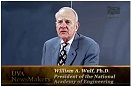
Professor William Wulf, President of the National Academy of Engineering, shares that while engineering has grown significantly over the past decades, engineering education has not experienced the same level of development

Dr. Richard Felder, Professor of Chemical Engineering at North Carolina State University and a prominent international expert in engineering education, presents examples of active learning methods in this program and demonstrates how to implement them practically in the classroom.

Responsive Image